
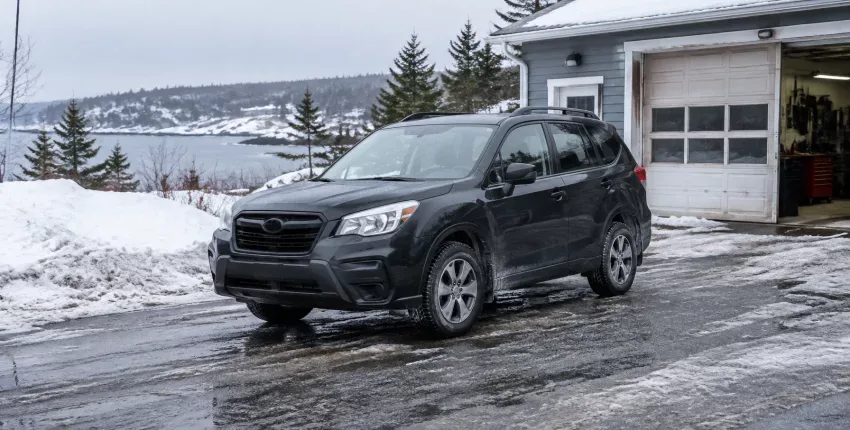
Nova Scotia winter driving can mean fresh snow one day, wet slush the next, and a slick patch of ice when temperatures drop after a thaw. The tires on your vehicle affect how confidently it can accelerate, corner and stop through those changes.
Studded tires are permitted on most vehicles from October 15 through May 31 under Nova Scotia’s Studded Tires Regulations. You may have seen references to an April 30 end date, but the current regulation allows their use through May 31. Studs must also meet requirements for their size, number and installation.
That seasonal window doesn’t mean studded tires are right for every driver. Here’s how studded, studless winter, all-weather and all-season tires differ, and what to consider before choosing a set.
First, what’s the difference between winter and studded tires?
A studded tire is a type of winter tire with small metal studs embedded in the tread. Those studs are designed to bite into ice. A studless winter tire, by contrast, relies on its tread design and cold-weather rubber compound for grip. Both are made for winter conditions; studs are an extra feature, not a separate category of all-season tire.
All-weather tires are another option. They’re designed for use through changing seasons and carry the Three-Peak Mountain Snowflake (3PMSF) symbol when they meet a defined snow-traction performance requirement. That symbol is a useful indicator, but it doesn’t mean every all-weather tire performs identically to a dedicated winter tire.
All-season tires are generally designed to work across a broader range of conditions. They can be a sensible choice for mild weather, but they are not purpose-built for sustained cold, snow and ice.
Studded tires: extra bite for icy roads
When they may make sense
If you regularly encounter packed snow or icy surfaces, studded tires may be worth considering. Their metal studs can provide additional traction on ice compared with a similar studless tire. That extra grip may be helpful when your routine includes untreated roads, steep driveways or frequent early-morning travel in freezing conditions.
Studs aren’t a guarantee against sliding, though. They can’t overcome unsafe speed, short following distances or a sudden loss of control. Your driving habits, route and the condition of the tires all matter.
Trade-offs to weigh
Studded tires can be noisier on bare pavement, and their studs may wear road surfaces. They may also feel different from studless tires when you’re driving on clear, dry roads. If most of your winter driving is on treated, bare pavement, you may not benefit enough from studs to justify those compromises.
Nova Scotia’s regulations set limits on stud size and number, require studs to be securely embedded and specify that stud counts must be balanced between the vehicle’s left and right sides. Check the regulations for the details, and have a tire professional confirm that your set complies. Plan to remove studded tires before June 1.
Studless winter tires: a strong choice for varied winter conditions
A dedicated winter tire uses a tread pattern and rubber compound designed for cold-weather driving. Compared with many all-season tires, the compound is made to stay more flexible in low temperatures, while tread features help it grip snow and slush.
That makes studless winter tires a practical option for drivers who want winter-focused traction without metal studs. They can suit a range of winter road conditions, not only ice, though grip still varies by tire, vehicle and road surface.
The main drawback is seasonal changeover. Winter tires wear faster when used in warm weather, so you’ll need to switch back when conditions turn milder. If you choose winter tires, install a matching set of four rather than mixing winter and non-winter tires. Different levels of grip between axles can affect predictable handling.
All-weather and all-season tires: similar names, different expectations
All-weather tires
All-weather tires are designed to stay on your vehicle year-round while offering more winter capability than a conventional all-season tire. Look for the 3PMSF symbol when comparing options. It indicates the tire meets a specified snow-traction test, but it isn’t a promise of equal performance to every dedicated winter tire, especially in challenging ice.
They may be a reasonable compromise if you want one set of tires for the whole year and your winter driving conditions and mileage are moderate. Consider how often you face snow or ice, and ask a tire professional how a particular model suits your vehicle and use.
All-season tires
All-season tires offer versatility for drivers who see a mix of conditions, but “all-season” shouldn’t be read as “ideal for every season.” As temperatures fall and snow or ice becomes routine, a dedicated winter tire may offer a more appropriate level of cold-weather performance. The Nova Scotia government’s winter maintenance guidance describes winter tires in good condition as essential to safe winter driving.
If you’re weighing all-season tires against winter options, focus on the conditions you actually drive in, not just the label on the sidewall.

A quick comparison
- Studded winter tires: Consider them if ice is a frequent part of your driving. They can add grip on ice, but may be noisy on bare pavement and must comply with seasonal and equipment rules.
- Studless winter tires: Consider them if you want a tire designed for cold, snow and slush without studs. They require seasonal changeover and should not be used as a warm-weather set.
- All-weather tires: Consider them if you prefer one set year-round and want a winter-capable option. Check for the 3PMSF symbol and compare the model’s performance and suitability.
- All-season tires: Consider them for broad, moderate conditions, but think carefully before relying on them through frequent snow, ice and sustained cold.
What to think about before you buy
Start with the winter conditions you encounter most often. Do you mostly drive on treated roads, or do your trips regularly include snow-covered or icy surfaces? Are you able to change tires seasonally, or would a single all-weather set be more convenient? Your answers can help narrow the options.
Next, confirm the correct tire size and specifications for your vehicle. The owner’s manual and the information on your existing tires can help, but a tire professional can check what’s appropriate for your make and model. Don’t choose based on price alone: compare the tire’s winter capabilities, expected use and replacement costs over time.
Condition matters, too. A winter-rated tire that’s worn, damaged or incorrectly inflated may not perform as intended. For a quick at-home screening before winter, see our companion guide, The Toonie Test: How to Check Your Tire Tread at Home Before Nova Scotia Winter. It covers a simple visual check without replacing a professional assessment.
Tire installation, alignment and vehicle inspections
After a tire installation, pay attention to how your vehicle feels on the road. If the steering wheel isn’t centred, the vehicle pulls to one side, or you notice uneven tire wear, an alignment check may be worthwhile. A wheel alignment in Lower Sackville can help identify whether the suspension angles need adjustment; tire replacement itself doesn’t automatically mean your alignment is wrong.
A vehicle inspection (MVI) in Nova Scotia is a separate matter from selecting tires for winter. If you have concerns about tire condition, ask a qualified professional to assess them rather than assuming a scheduled inspection answers every winter-driving question.
Choose for the roads you actually drive
There isn’t one right tire for every driver. Studded tires may suit regular icy-road driving; studless winter tires offer dedicated cold-weather traction without studs; and all-weather tires can be a convenient year-round compromise. All-season tires are versatile, but may be less suited to frequent snow and ice.
If you’re unsure what fits your vehicle and routine, our ASE-certified technicians at Bluestone Automotive can help you consider your options. We serve Lower Sackville, NS and surrounding areas. Schedule an appointment online, or visit us at 474 Cobequid Rd, Lower Sackville, NS.